Bio-Planter
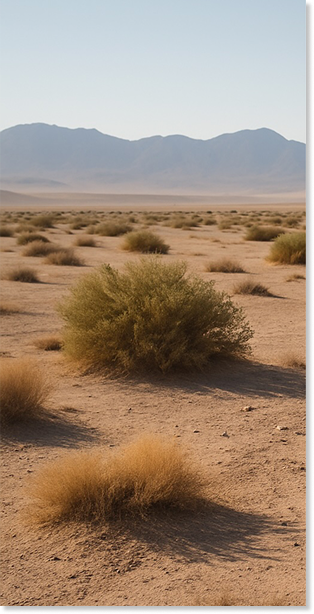
Two of the most critical environmental issues of the twenty-first century are soil erosion and lack off water, two related issues that exacerbate one another and jeopardize attempts to create sustainable ecosystems. Conventional irrigation or afforestation techniques are expensive, ineffective, and ultimately unsustainable in arid regions.
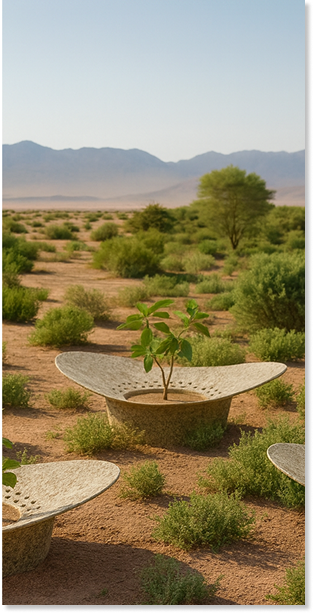
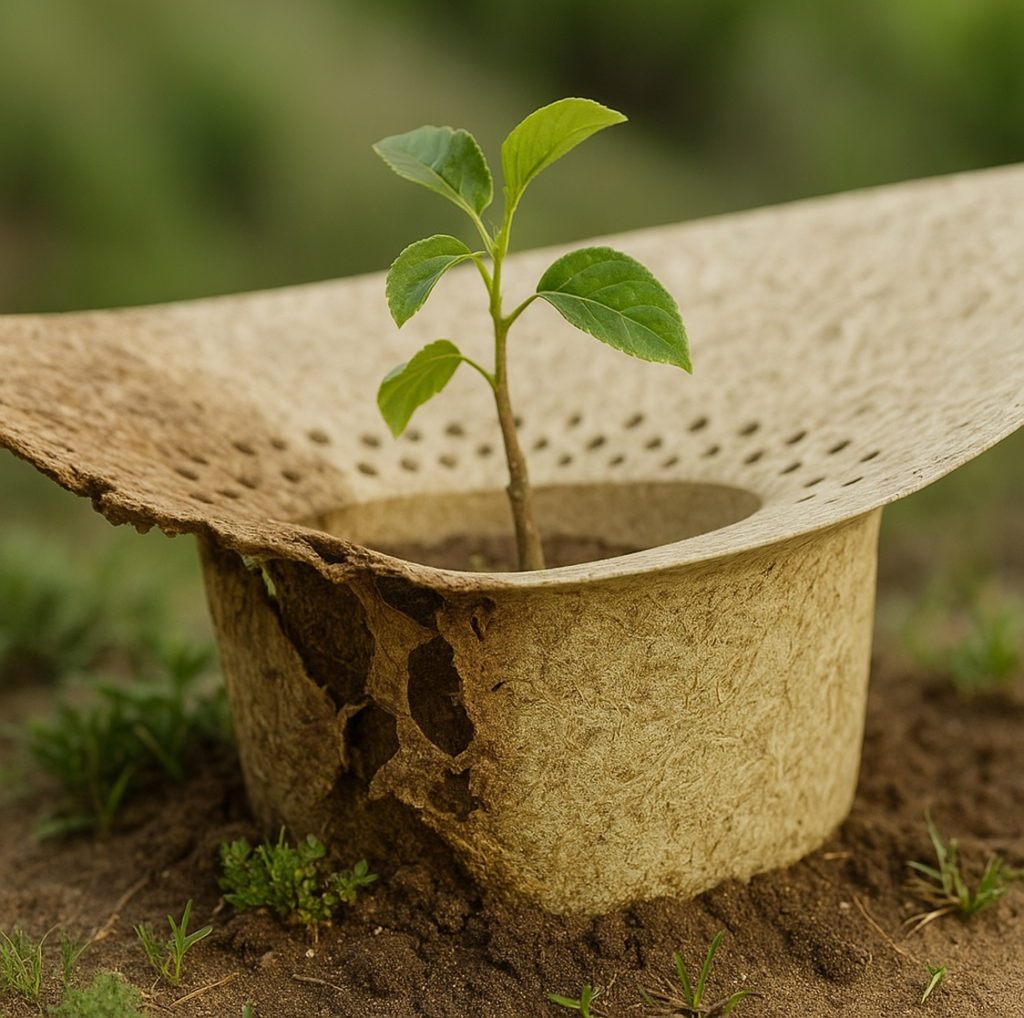
The WAHA Project provides a rather radical yet credible alternative: a biopolymer-based modular system that passively captures and stores rainwater, prevents surface evaporation, and regenerates the soil over time, without any active irrigation or synthetic infrastructure. The system focuses on a funnel-shaped biostructure built from algae biomass and agricultural residues (straw) that shades, channels water directly to plant roots, and breaks down over time to impart organic matter to the soil.
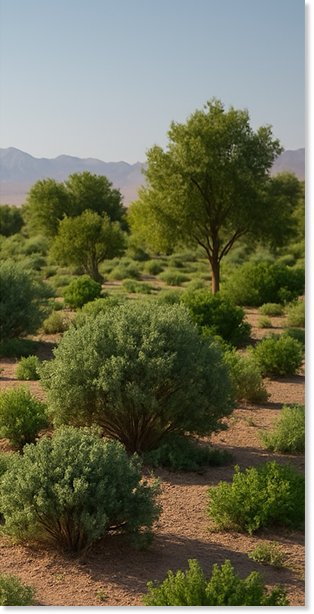
WAHA, unlike the tree-planting projects, is more focused on the reclamation of degraded lands through a combination of pioneering shrub species coupled with microbial restoration processes. This infrastructure will essentially act as a shade provider to surrounding ground-cover plants and also promote polyculture instead of monoculture. WAHA is a low-tech, low-cost but high-impact alternative to water-greening projects. WAHA acts as a passive device for the collection of surface water, an enhancer of soil with biomaterial, an intermediary in defining the relationship between water conservation and land rehabilitation; regeneration does not have to depend on overly complex technologies or huge amounts of energy.